Symptoms
Hair thinning in perimenopause
Hair thinning is on the NHS list of perimenopause symptoms, and the usual pattern is slow: a wider parting and a thinner ponytail over months. Sudden heavy shedding, bald patches, or thinning with heavy periods, tiredness or new facial hair point to other causes that a GP can test for.
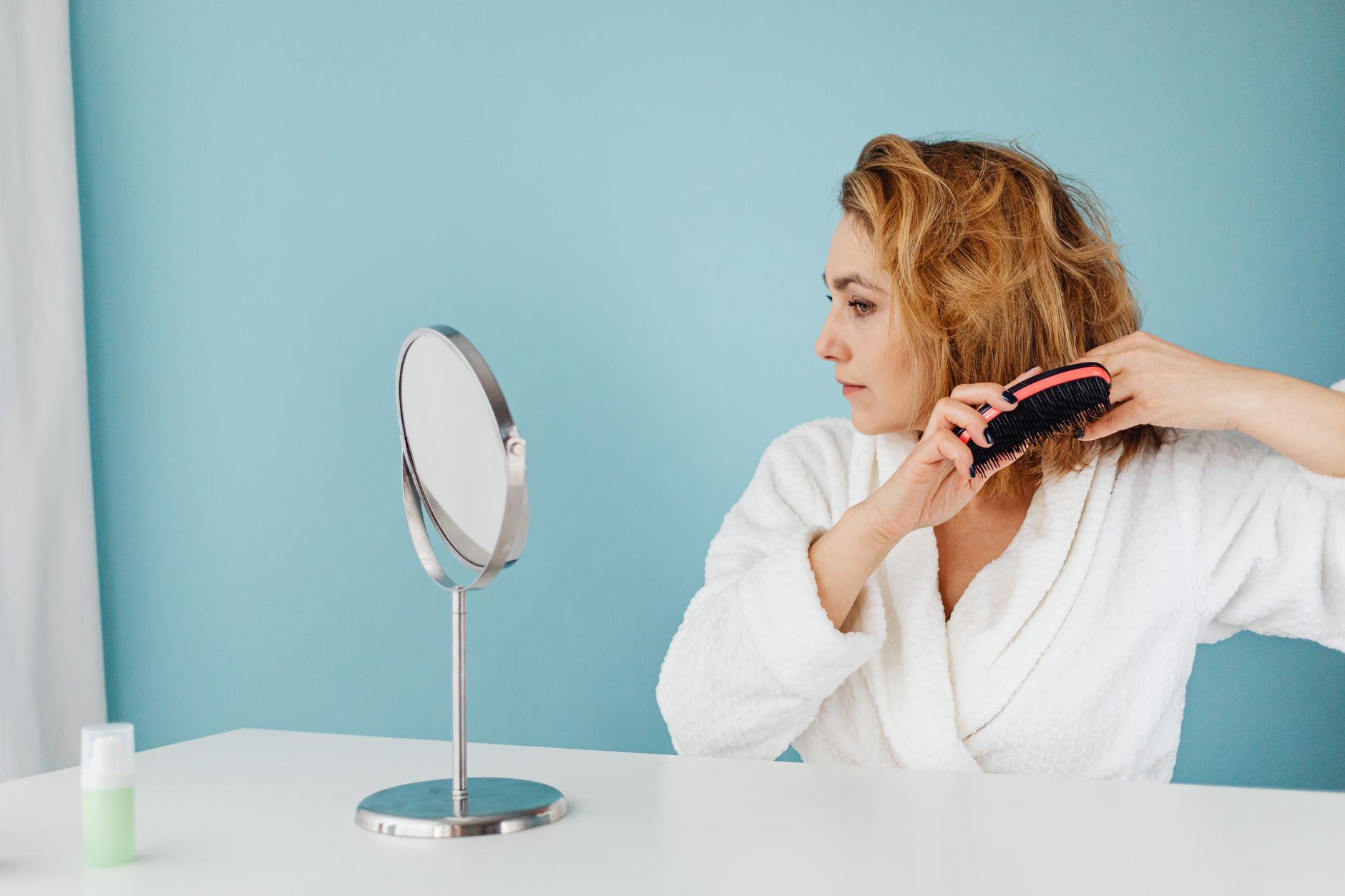
What perimenopause hair loss usually looks like
The NHS perimenopause symptom list includes hair thinning alongside hot flashes, poor sleep, dry skin and joint aches. Most women notice it slowly. The parting looks wider in photos, the ponytail band needs an extra twist, more scalp shows under a bathroom light, and the hair at the temples may sit further back than it did.
Some hair in the brush is normal at any age. The NHS hair loss page says most of us lose between 50 and 100 hairs a day, often without noticing them. That is why a change in how your hair looks, over months, tells you more than a count on any single morning.
Female pattern hair loss in your 40s
The commonest reason for thinning hair in midlife is female pattern hair loss. The American Academy of Dermatology calls it the most common cause of hair loss in women and says it usually begins in the 40s, 50s or 60s. It runs in families, through genes from either parent. Because it becomes more common after menopause, the AAD says hormones may also play a part.
The New Zealand dermatology reference DermNet adds detail that helps set expectations. Around 40% of women show signs of it by 50. The thinning spreads over the top of the head, women rarely go bald the way men do, and it tends to move in bursts: three to six months of faster loss, then six to eighteen months when it holds steady. DermNet also says the role of oestrogen is uncertain, and that most women with this pattern have normal levels of male hormones in their blood. So perimenopause may bring it to light without being the whole explanation.
Other causes of thinning hair that look the same
Several common conditions start in the same years and can thin the hair in the same way. The pattern of the loss, and what comes with it, is what tells them apart.
Shedding after a shock to the system (telogen effluvium)
Here a lot of hair falls out at once, from all over the scalp, some weeks after a trigger. DermNet's telogen effluvium page says the extra shedding shows up 2 to 4 months after the event and usually tapers back to normal over 6 to 9 months, often with a fringe of short new hairs along the forehead. Triggers on the AAD's shedding page include a high fever, an operation, losing 20 pounds or more, a period of heavy stress and stopping the pill. DermNet describes a long-running form that tends to affect otherwise healthy women aged 30 to 60, and notes it can uncover female pattern hair loss underneath.
Iron deficiency from heavy periods
Heavier periods are common in perimenopause, and the NHS iron deficiency anaemia page names heavy periods as a very common cause of low iron. Hair loss is on its list of less common symptoms, described as more hair coming out when you brush or wash it. The usual signs are tiredness, shortness of breath, palpitations, pale skin and headaches. If your periods have become heavy, our guide to heavy periods in perimenopause and the PBAC blood loss scorer help you describe how heavy.
An underactive thyroid
The NHS underactive thyroid page lists dry skin, dry hair or hair loss among its common symptoms, next to tiredness, feeling cold, weight gain, low mood, trouble concentrating and irregular or heavy periods. Almost all of those also turn up in perimenopause. The NHS adds that Hashimoto's disease, the main cause in the UK, usually starts between 30 and 50. Our page on perimenopause or thyroid sets out which signs point which way.
Raised male hormones
A small number of women with thinning hair have high levels of androgens. DermNet says they tend to have acne, irregular periods and extra facial or body hair as well, a picture typical of polycystic ovary syndrome. Thinning hair with new chin hairs or adult acne is worth naming at the appointment, because it changes which blood tests make sense.
Patches, pulling and medicines
A round or oval smooth bald patch is the usual start of alopecia areata, which the AAD describes as patchy and unpredictable and able to begin at any age. The AAD's shedding page also lists tight hairstyles that pull, harsh hair products and some drugs and treatments as causes of hair loss. If you think a medicine is behind it, talk to the doctor who prescribed it before stopping, since the AAD warns that stopping some treatments suddenly can cause serious side effects.
What a GP may check
The NHS says a GP may be able to tell what is causing hair loss just by looking at it. Blood tests depend on the rest of the story. A full blood count is the NHS test for iron deficiency anaemia, and thyroid function is checked with TSH and T4 when the symptoms fit. DermNet lists sex hormones and thyroid tests as part of a hair loss workup, and says a scalp biopsy is sometimes needed to confirm the diagnosis. A GP can refer you to a dermatologist from there.
A hormone test will not confirm that the thinning is perimenopause. For women over 45, NICE says perimenopause is recognised from symptoms and cycle changes without hormone tests. Our article on whether there is a test for perimenopause explains why. Any blood tests for thinning hair are there to look for the other causes on this page.
When to see a GP about thinning hair
The NHS bar is low: see a GP if you are worried about your hair loss. It also advises seeing a GP before paying a commercial hair clinic, so you know the cause first. Book sooner if:
- hair is coming out in handfuls, or the shedding started suddenly
- you have a smooth bald patch, or several
- the thinning comes with heavy periods, tiredness, breathlessness or palpitations
- you also feel cold, have put on weight or feel slowed down
- you have new facial or body hair, or acne
- it began soon after you started a new medicine
Tell the GP if it is getting you down. The NHS says hair loss can be upsetting, and a GP may be able to help you get counselling.
What to note before the appointment
Hair changes are slow, which makes them hard to describe. A few notes give the GP the pattern behind each look-alike above:
- when you first noticed it, and whether it came on over weeks or over a year
- whether it is extra hair in the brush, a wider parting, or both
- a photo of your parting each month, in the same light
- anything that happened two to four months before it started, such as an illness, an operation, a big weight loss or a hard stretch at home or work
- your period dates and how heavy each one is
- tiredness, feeling cold, low mood, new facial hair or acne
- new medicines, and any close relatives with thinning hair
The printable symptom diary on this site keeps periods and symptoms on one sheet, with room to rate each symptom as mild, moderate or severe. Print it, fill it in for a month, and take the photos of your parting along with it.
My take
If you are in your 40s, your cycles are changing and your parting has widened slowly over a year or two, I'd read it as the common midlife pattern and still raise it at your next appointment. I'd book sooner for the opposite picture: hair coming out in handfuls, a bald patch, or thinning that arrived with heavy periods and tiredness. Iron and thyroid problems are common at this age, easy to test for, and they are the causes on this page that a blood test can find. The most useful note to bring is when it started and what happened in the few months before, because shedding after a shock tends to appear 2 to 4 months later.
Related reading
Hair thinning sits with the other body changes in perimenopause symptoms and how to track them. If aches are arriving in the same months, see joint pain and muscle aches in perimenopause, and the symptoms topic collects every symptom page on the site.
Frequently asked questions
Is losing 100 hairs a day normal in your 40s?
Can perimenopause make hair fall out in clumps or patches?
Should I ask my GP for an iron test if my hair is thinning?
Written by
Last checked 2026-11-05
Comments
No comments yet. Questions and your own experience are welcome.
Thank you. Your comment will appear once it has been reviewed.