Is it perimenopause?
Perimenopause or thyroid?
From your symptoms alone you often cannot tell, because tiredness, weight gain, low mood, poor sleep and changing periods belong to both. The difference is that a thyroid problem shows up on a blood test, while perimenopause after 45 is recognised from symptoms and cycle changes, so the test is how a doctor rules the thyroid in or out.
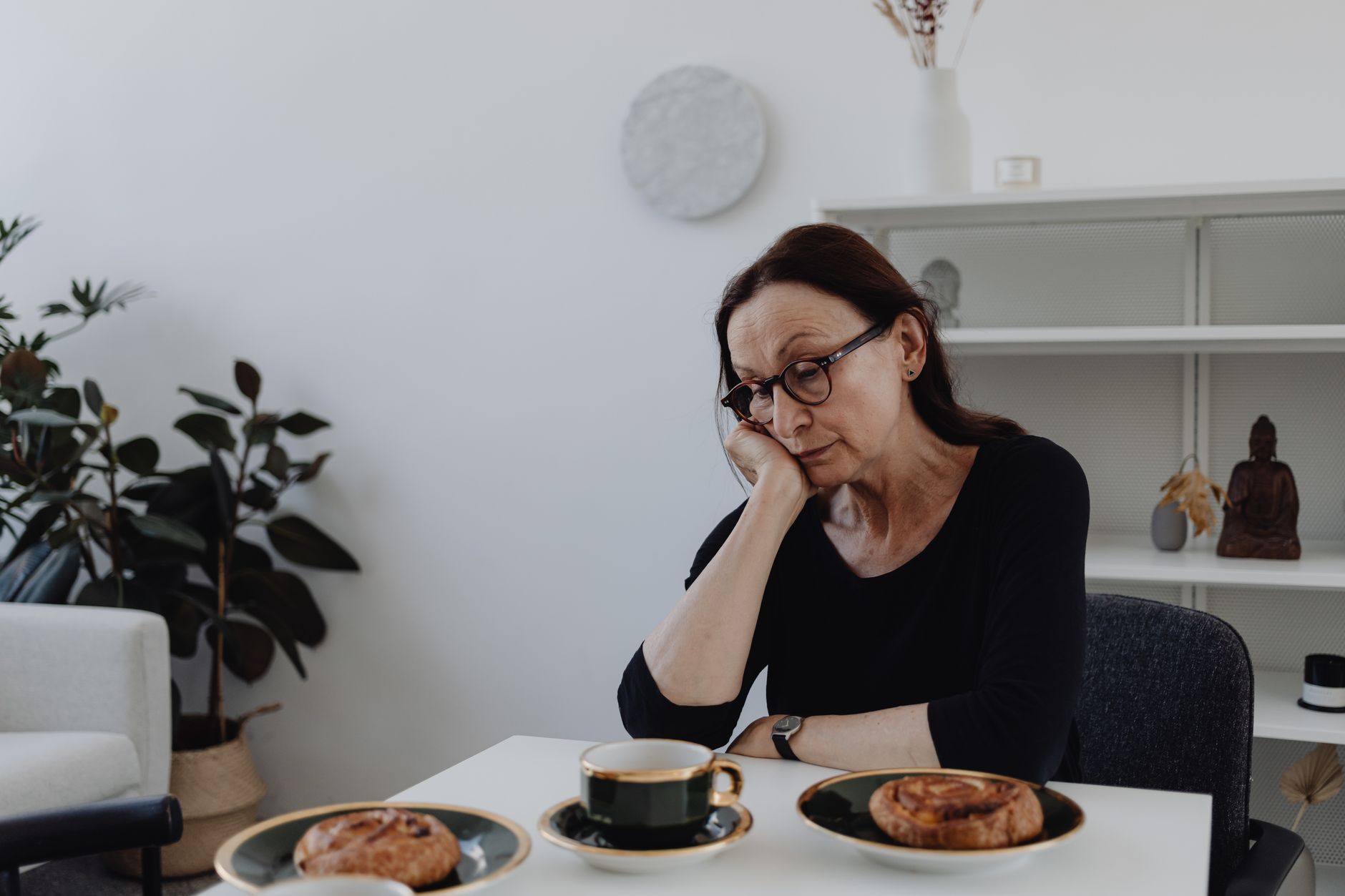
Why the two are so easy to confuse
Both are hormone changes, both turn up often in women's 40s and 50s, and both produce symptoms that are vague on their own. The British Thyroid Foundation says women get thyroid disorders about ten times as often as men, that the risk of an underactive gland rises with age, and that it is "not unusual for thyroid symptoms to be put down to menopause and vice versa".
The timing lines up too. The NHS says Hashimoto's disease, the main cause of low thyroid function in the UK, mostly affects women and usually starts between 30 and 50. Perimenopause usually begins in the mid-40s. So a woman can easily have both at once, and the BTF says that is common.
UK doctors are told to watch for this. The NICE guideline on thyroid disease asks clinicians to be aware that in menopausal women, symptoms of thyroid dysfunction may be mistaken for menopause.
Perimenopause vs hypothyroidism symptoms
An underactive thyroid (hypothyroidism) is the one most often mixed up with perimenopause. Put the NHS list for it next to the NHS perimenopause list and these appear on both:
- tiredness, which the thyroid page calls feeling extremely tired, alongside the sleep problems of perimenopause
- putting on weight, which perimenopause tends to add around the middle
- trouble concentrating or thinking clearly, the brain fog many women describe
- low mood or depression
- dry skin, dry hair or hair thinning
- irregular or heavy periods
That last one catches people out. Periods that have become heavier, or further apart, in your mid-40s look like the transition, and often they are. Our guides to irregular periods and heavy periods and clots both list hypothyroidism among the other causes for exactly this reason.
An overactive thyroid looks like perimenopause in other ways
Hyperthyroidism is less common. The BTF puts it at around 1.5% of women in midlife. Its symptoms overlap with a different set of perimenopause complaints. The NHS symptoms page lists sensitivity to heat, warm skin and heavy sweating, difficulty sleeping, nervousness, anxiety, irritability and mood swings, an irregular or fast heartbeat, patchy hair thinning, itchy skin and less interest in sex. The NHS perimenopause list has a match for every one of those, from hot flushes (its word for hot flashes) and night sweats to palpitations.
It can change periods as well. The BTF says uncontrolled hyperthyroidism can affect and even stop periods, and can make perimenopausal symptoms worse in women already in or near the transition.
Thyroid or menopause symptoms: the clues that point one way
No single symptom settles it, and NICE itself warns that one symptom alone may not point to thyroid disease. Some symptoms are still more at home on one list than the other. The NHS thyroid pages name several that the perimenopause list does not.
Signs that lean towards an underactive thyroid:
- feeling colder than usual
- constipation
- a croaky, hoarse voice
- symptoms that came on slowly and have kept getting worse, which is how the NHS says they usually develop
Signs that lean towards an overactive thyroid:
- losing weight, often while eating more
- trembling or twitching, and feeling restless with nervous energy
- diarrhoea, constant thirst, or needing to pee more often
- a swelling in the front of the neck (a goitre)
- red, gritty or dry eyes, or changes in your vision
And signs that sit with perimenopause rather than the thyroid: vaginal dryness, more urinary infections, and a cycle that follows the pattern researchers use to stage the transition in STRAW+10, with cycles first shortening, then swinging by a week or more, then gaps of 60 days. One more clue comes from NICE, which notes that the body holds a large reserve of thyroxine, so symptoms that swing from one day to the next are unlikely to be caused by the thyroid. Perimenopause symptoms are known for exactly that kind of up and down.
When a thyroid blood test is used
This is where the two part ways. For women aged 45 and over, the NICE menopause guideline says perimenopause is recognised from symptoms and changes in the cycle, without hormone tests. A thyroid problem, on the other hand, is confirmed with a blood test. So a normal thyroid result is useful information even when it does not name what you do have.
NICE NG145 tells clinicians to consider thyroid tests when there is a clinical suspicion of thyroid disease, and to offer them to people with type 1 diabetes or another autoimmune condition, or with a newly found irregular heart rhythm (atrial fibrillation). It also suggests considering a test for adults with depression or anxiety that has no clear explanation. Mood that dips in the days before each period and lifts after it points elsewhere, and our page on PMDD or perimenopause covers that pattern.
The BTF article, updated with a consultant endocrinologist, adds the practical line for this age group. If you developed typical menopause symptoms after 45, a thyroid test is not usually needed. If your symptoms are severe or do not fit menopause alone, or there are red flags such as unexplained weight gain, weight loss or palpitations, your doctor will check your thyroid.
On the NHS, a GP will ask whether anyone in your family has had a thyroid or autoimmune condition, may feel your neck for swelling, and may order blood tests for thyroid-stimulating hormone (TSH) and thyroxine (T4). NICE suggests starting with TSH and adding the other hormones from the same sample if it comes back high or low.
Three things that can throw the test off
- Biotin supplements. NICE asks doctors to check biotin intake, because high doses from supplements can make thyroid results falsely high or low. Hair, skin and nail products often contain it, so mention anything you take.
- Being unwell. NICE advises against testing during an acute illness unless the illness itself may be thyroid-related, because it can affect the results.
- A borderline result. The BTF says a one-off borderline result is usually repeated. If the repeat is normal, the thyroid is unlikely to be behind your symptoms.
Thyroid problems in perimenopause
A thyroid result does not make perimenopause go away, and the reverse holds too. The BTF says symptoms in midlife may come from a combination of causes, and that both conditions need to be managed well because their effects add up. Its advice for anyone with a diagnosed thyroid condition is that if symptoms continue once the thyroid levels are right and nothing else explains them, menopause is the likely cause.
If you already take thyroid medicine, the BTF notes that the amount you need can change during the menopause transition, partly because of falling estrogen and changes in weight, and that a yearly blood test is the usual check. If your annual test is overdue and new symptoms have appeared, raise it with your GP.
For anyone under 40 whose periods have become irregular or stopped, the link runs the other way. The BTF says premature ovarian insufficiency is associated with autoimmune thyroid disease and that thyroid problems can occur in 14 to 27% of women who have it, which is why it says they should be tested for thyroid antibodies and TSH when they first see a doctor about it. Our piece on when perimenopause starts covers the early and premature cut-offs.
What to bring to the appointment
The NHS page on an overactive thyroid suggests making a list of all your symptoms to show the GP, and that is the most useful thing you can do for either question. Because so many symptoms overlap, the details are what help: when each one started, whether it is there every day or comes and goes, and how it sits against your period dates. A few lines worth writing down before you go:
- the start date of each period for the last six months or more
- whether heat and sweating come in sudden episodes or are there most of the time
- any weight change, and over how many months
- feeling cold, constipation, a hoarse voice, a tremor or a racing heart, if you have them
- thyroid or autoimmune conditions in your family
- every supplement you take, biotin included
Our printable symptom diary, which comes with an appointment checklist, gives you a grid for a few weeks of this, rated mild, moderate or severe, and our overview of perimenopause symptoms and how to track them explains what makes a record useful to a doctor.
My take
If you are past 45 with classic symptoms and your periods are changing in the usual way, I would not push for a thyroid test on that basis alone, and the guidance agrees. I would ask for one if you feel cold when others are warm, have lost weight without trying, have a racing heart, a swelling in your neck, a hoarse voice, or an autoimmune condition already, or if your tiredness has crept up steadily for months. And if a test comes back normal and you still feel unwell, take that as one cause crossed off, then keep your record going and go back.
Related reading
The Is it perimenopause? topic gathers our pieces on telling the transition apart from other causes, and spotting between periods in perimenopause covers the bleeding that should be checked whatever the cause turns out to be.
Written by
Last checked 2026-11-02
Comments
No comments yet. Questions and your own experience are welcome.
Thank you. Your comment will appear once it has been reviewed.