Periods and bleeding
Is my period heavy?
A period counts as heavy on the blood loss chart doctors use when it scores 100 or more, which matched a loss of over 80 ml in the study that set it. Clots bigger than about 2.5 cm, soaking a pad every hour or two, or bleeding that stops you going out are reasons to see a GP whatever the score. Count each day below and the page adds it up.
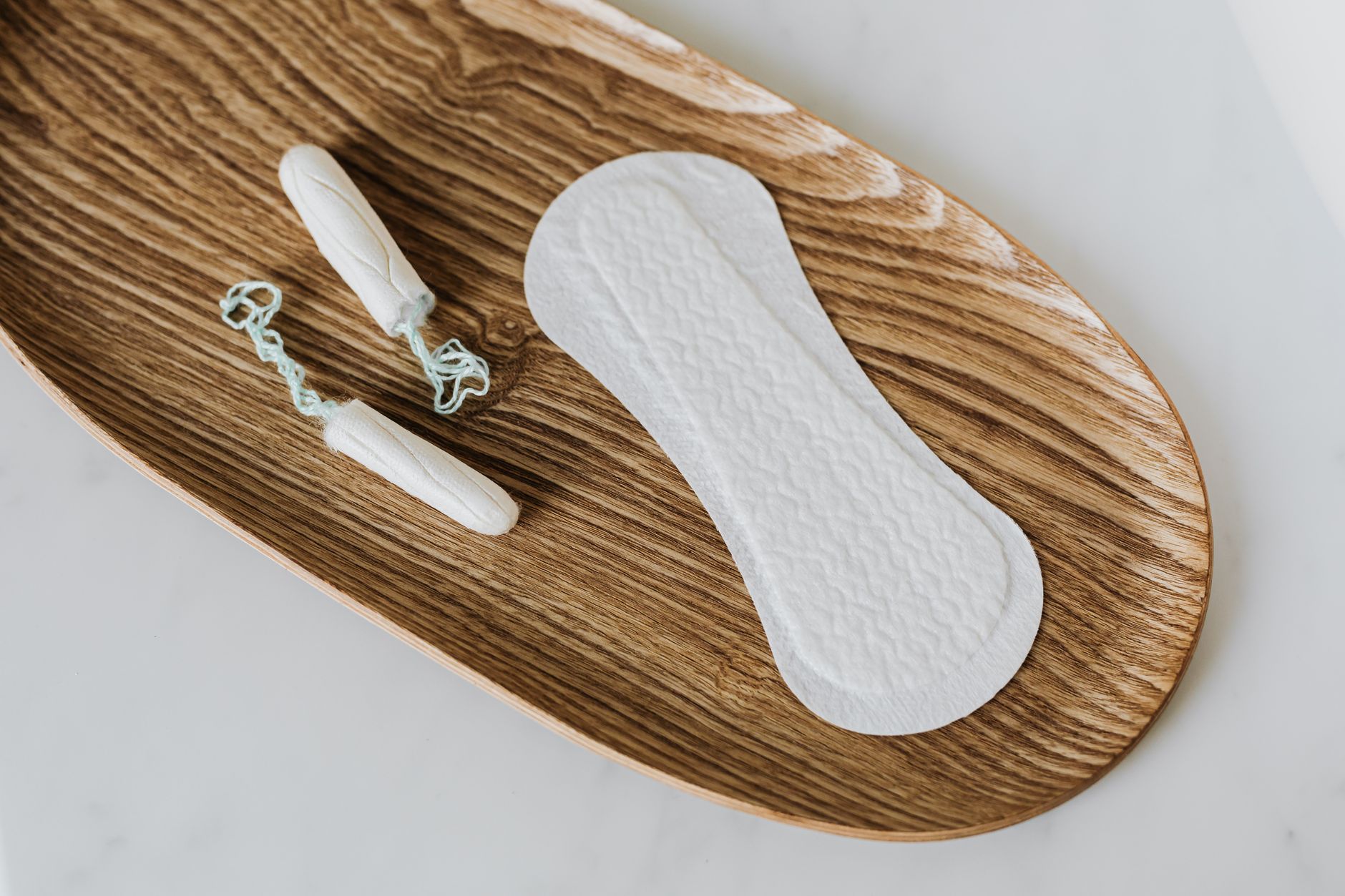
The chart is the Pictorial Blood Loss Assessment Chart, or PBAC, published by Higham, O’Brien and Shaw in 1990. You record every pad and tampon you use, how soaked each one was, the clots you pass and any "flooding", and each gets points. Clinical trials on heavy bleeding still use it. It works best if you fill it in day by day during your period rather than from memory.
Score your period
Fill in one box per day of bleeding. Leave a box empty if the answer is none. A product is lightly stained if the blood covers a small patch, moderately soaked if it covers about half, and completely soaked if it covers almost all of it.
How the PBAC score works
Each item earns points based on how much blood it holds. A soaked pad scores 20 and a soaked tampon 10, because a pad holds more blood. The values below are Higham’s, as reproduced by the World Federation of Hemophilia, which uses the chart to screen for bleeding disorders, and by the University of Birmingham trials unit.
| Item | Light | Moderate | Soaked |
|---|---|---|---|
| Pad | 1 | 5 | 20 |
| Tampon | 1 | 5 | 10 |
A small clot, about the size of a 1p coin, scores 1. A large one, about a 50p coin or a US quarter, scores 5. Each flooding episode, when blood leaks past what you are wearing, also scores 5. Add up the points for every day of the period to get the total. In the original study, a total of 100 or more identified women whose measured loss was over 80 ml. Medical Algorithms reports that the cut-off gets it right more than 80% of the time, both for heavy periods and for normal ones. For scale, nidirect puts an average period at 6 to 8 teaspoons of blood.
What your score means
100 or more. This is the cut-off the chart was built around. Book a GP appointment and take your day-by-day list. The NHS heavy periods page says a GP will ask about your bleeding, may examine you and can offer a blood test for iron deficiency anaemia.
Under 100, with other signs. The UK guideline does not use a number at all. NICE NG88 defines heavy menstrual bleeding as loss that interferes with your physical, social, emotional or material quality of life. If you bleed through your clothes, need two products at once, stay home because of it, or have a period that lasts more than 7 days, book an appointment even if you scored 60.
Under 100, nothing else ticked. Your period sits below the heavy line on this chart. Keep scoring if it changes, because periods during perimenopause often swing between light and heavy from one cycle to the next.
Emergency. The American College of Obstetricians and Gynecologists says to seek emergency care if you soak through a pad or tampon every hour for more than 2 hours and also feel dizzy, breathless or have chest pain. The scorer shows that first, above the number.
A worked example
Take a five-day period with pads only. Day 1: two moderately soaked pads (10), one soaked pad (20) and two small clots (2), so 32. Day 2 is the heaviest: three soaked pads (60), one large clot (5) and one flood (5), so 70. Day 3: two soaked pads and one moderate (45). Day 4: two moderate pads (10). Day 5: two lightly stained pads (2). The total is 159, well over 100, and day 2 alone came close to the line.
Compare a period with tampons only: three moderate on day 1 (15), four moderate and one soaked on day 2 (30), three moderate on day 3 (15) and two light on day 4 (2). That adds up to 62. It is under the cut-off, and if nothing else on the list applies, the scorer reads it as below the heavy line.
Heavy periods with big clots in perimenopause
Small clots are common on the heaviest days, when blood pools before it leaves the womb. The NHS lists clots bigger than about 2.5 cm as a sign of a heavy period, and ACOG gives the same size as "a quarter". In perimenopause, cycles without ovulation can let the womb lining build up for longer, so some periods are heavier and have more clots than you are used to. Fibroids, polyps and, less often, a thickened womb lining can cause the same symptoms, which is why a GP will still want to see you. Our guide to heavy periods and blood clots in perimenopause explains the causes and the tests.
Signs you are losing too much blood
Heavy periods month after month can drain your iron. The NHS links tiredness and getting short of breath easily to iron deficiency anaemia, and a blood test can confirm it. The faster warning is the one ACOG gives: hourly soaking for over 2 hours with dizziness, breathlessness or chest pain means emergency care now. If the bleeding has also gone on for weeks, bleeding for weeks in perimenopause covers what that can mean.
What the chart cannot do
The PBAC is an estimate. The pads and tampons of 1990 held different amounts from today’s, and "moderately soaked" is a matter of judgement. The chart also has no pictures for cups or period pants, so if you use them your score will come out too low. It also leaves out bleeding between periods, after sex or after menopause, which a doctor should check however light it is. For those, use the perimenopause bleeding checker. A score is a record to show a doctor, and it does not diagnose anything.
My take
I'd start on day one of your next period, fill in the boxes each evening, and score the cycle after it too. I'd judge the result by both numbers together. Two cycles side by side show your doctor whether the heavy month was a one-off or the new pattern. If your result came out under 100 but you ticked "stayed in" or "bled through", I'd still book. NICE puts the effect on your life ahead of any number, and that is a fair reason to be seen. The printable symptom diary has room to write the scores next to your other symptoms.
Frequently asked questions
What is a normal PBAC score?
Can I score a period if I use a menstrual cup or period pants?
Should I take the score to my GP?
Related reading
Every guide on spotting, clots and changing cycles is collected in our periods and bleeding topic. If your periods are also arriving at odd intervals, the cycle length calculator shows how far your cycle has moved, and irregular periods in perimenopause explains which changes are expected.
Written by
Last checked 2026-11-04
Comments
No comments yet. Questions and your own experience are welcome.
Thank you. Your comment will appear once it has been reviewed.