Periods and bleeding
Heavy periods and blood clots in perimenopause
Periods often get heavier in the years before menopause, and some clots on the heaviest days are part of that. A period counts as heavy, and is worth taking to a doctor, when you soak a pad or tampon every hour or two, bleed for more than 7 days, pass clots bigger than about 2.5 cm, or bleed through to your clothes or bed.
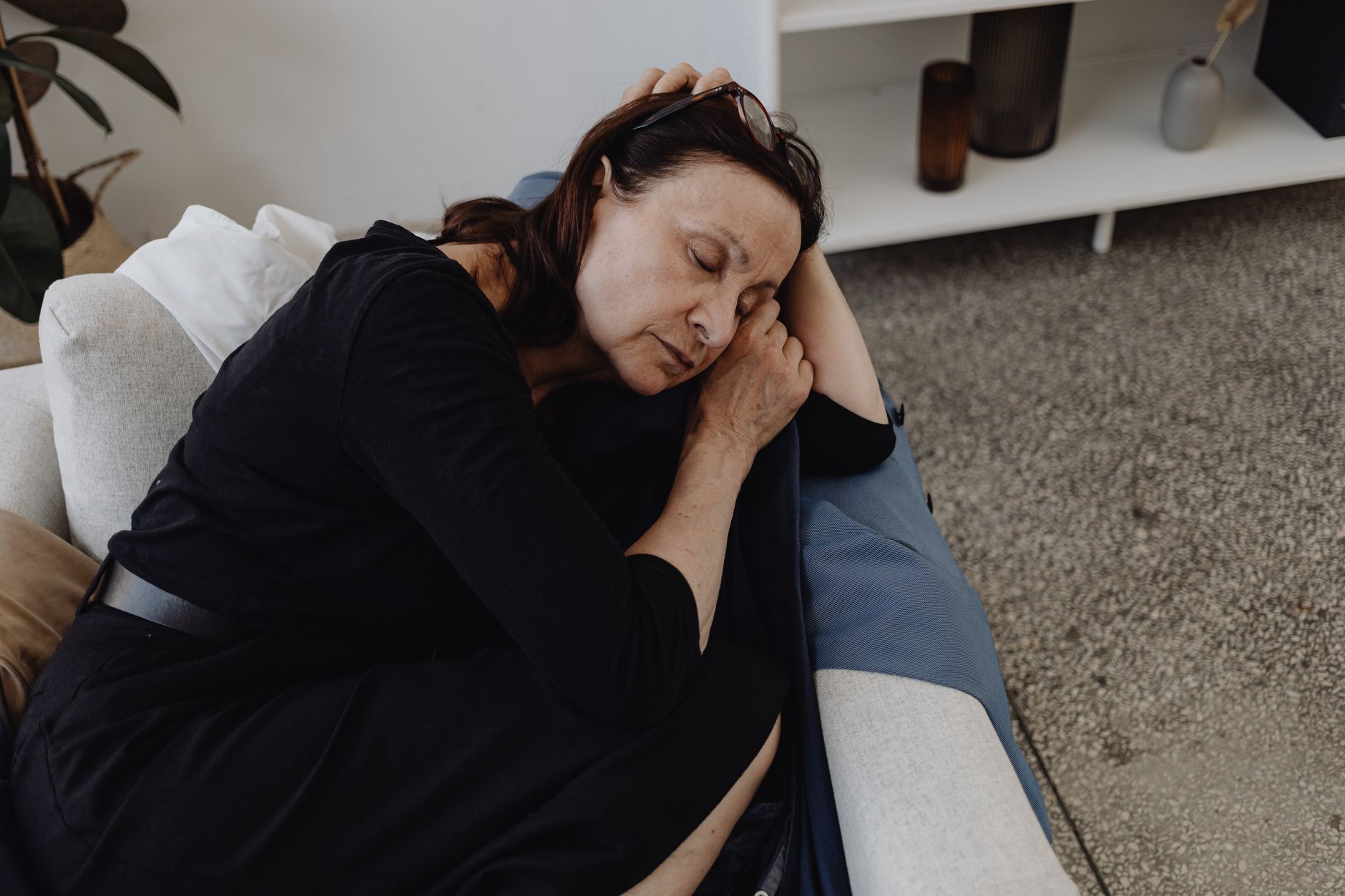
Why periods can get heavier in perimenopause
The usual reason is that ovulation becomes irregular. In perimenopause the ovaries stop releasing an egg every month, and the American College of Obstetricians and Gynecologists (ACOG) explains that when you do not ovulate regularly, parts of the womb lining can grow too thick. When that thicker lining sheds, the period that follows can be longer and heavier than you are used to. The same skipped ovulation is behind the shifting cycle lengths described in our guide to irregular periods in perimenopause. ACOG names puberty and perimenopause as the two stages of life when this is common.
The NHS says the same in plainer terms: heavy periods can be normal, and they are more likely at certain times, including the approach to menopause. So a heavier month in your mid-40s has an ordinary explanation more often than not. It still deserves a closer look, because the same symptom has other causes that are worth ruling out.
What counts as a heavy period
"Heavy" is easier to judge with numbers than by feel, and both the NHS and ACOG give them. Taken together, any of these is a sign of heavy menstrual bleeding:
- changing a pad or tampon every 1 to 2 hours, or soaking through one or more every hour for several hours in a row
- needing two products at once, such as a pad with a tampon, or two pads
- getting up in the night to change
- bleeding that lasts more than 7 days
- clots about 2.5 cm across or larger
- bleeding through to your clothes or bedding
- missing work or skipping exercise and other plans because of your period
- feeling tired or short of breath much of the time
One item on that list is enough. You do not need to tick several before it counts. If you use a menstrual cup, the NHS measure is emptying it more often than the maker recommends.
Blood clots: which size matters
Clots form when blood collects faster than the body can keep it thin, so they tend to appear on the heaviest days. The size that both bodies single out is the useful number. The NHS sets it at clots larger than about 2.5 cm, the size of a 10p coin. ACOG says clots as big as a quarter or larger, which is close to the same size.
A few small clots on your heaviest day sit below that line. What I would note down is the pattern: clots that are bigger than a coin, clots on most days of a period, or clots that are new for you. Note the size on the day by comparing it with something familiar, such as a coin or a grape, because size is very hard to recall a week later.
Flooding: sudden, very heavy bleeding
Flooding is the word many women use for a gush that overwhelms a pad or tampon within minutes, often when standing up after sitting or lying down, and sometimes leaking through clothes or onto the bed. It matches two of the measured signs above, bleeding through to clothes or bedding and soaking a product within an hour, so it counts as heavy bleeding and belongs in the conversation with your doctor.
There is one situation where I would not wait for a routine appointment. If you are soaking through a pad or tampon every hour for several hours and you also feel faint, dizzy, short of breath or your heart is racing, get urgent medical help the same day. ACOG notes that heavy blood loss can lead to anaemia, and that severe anaemia can cause shortness of breath and strain the heart.
Tiredness and anaemia
Heavy periods month after month can drain the body's iron. ACOG says blood loss from heavy periods can cause iron-deficiency anaemia, and the NHS lists constant tiredness and breathlessness among the signs of heavy periods themselves. That matters in perimenopause, because tiredness is easy to blame on poor sleep or night sweats and leave at that.
The NHS says a doctor may arrange blood tests to check for iron deficiency anaemia. If you are exhausted and your periods are heavy, say both in the same sentence at the appointment so they are looked at together.
Other causes a doctor will want to rule out
Perimenopause is the likeliest explanation, but there are others. ACOG and the NHS list several other causes of heavy menstrual bleeding:
- fibroids and polyps, growths in or on the womb that are usually not cancer
- adenomyosis, where womb lining grows into the muscle wall, and endometriosis
- bleeding disorders such as von Willebrand disease, where blood does not clot properly
- medicines, including blood thinners and aspirin, and the copper IUD, especially in its first year
- an underactive thyroid (hypothyroidism), which shares several symptoms with perimenopause, and pelvic inflammatory disease
- pregnancy-related bleeding, such as a miscarriage or an ectopic pregnancy, which is still possible in perimenopause
Rarely, heavy bleeding is an early sign of womb (endometrial) cancer. ACOG says most cases are found in women in their mid-60s, after menopause, and are often caught at an early stage when treatment works best. That is one of the main reasons doctors want to hear about bleeding changes rather than have you wait them out.
When to see a doctor about heavy bleeding
The NHS suggests seeing a GP if heavy periods are affecting your life, if you have had them for some time, or if you have severe period pain. It also lists bleeding between periods or after sex, and heavy periods that come with pain when peeing, pooing or having sex.
ACOG's guide to bleeding in perimenopause and after menopause adds periods that are heavier or last longer than usual for you. And once you have gone 12 months without a period, any bleeding at all needs checking, however light. Our overview of perimenopause symptoms and how to track them sets these bleeding changes beside the other symptoms of the transition.
What to write down before your appointment
ACOG says your doctor will want detailed information about several cycles: the date each period started, how long bleeding lasted, and the amount of flow, rated light, medium, heavy or spotting. It suggests keeping track on a calendar or in a period-tracking app. For heavy periods I would add four things to each entry:
- how many pads or tampons you used on the heaviest day, and how many times you changed overnight
- the size of the largest clot, compared with a coin
- any flooding, with the time of day
- days you missed work or changed plans, and how tired you felt, mild, moderate or severe
Two or three cycles of this is enough to show whether bleeding is getting heavier, staying the same or settling. Our printable symptom diary and appointment checklist has room for flow and spotting next to your other symptoms, and you can take it in on paper.
A notes app on your phone works just as well, as long as each entry carries the date. On the day, take a one-page summary: the start dates, the heaviest-day counts, the largest clot and any flooding, with your two or three questions at the top.
What happens at the appointment
According to ACOG, a doctor will usually ask about your health history, any pregnancies, the medicines you take (including ones bought over the counter), your contraception and your cycle. A physical and pelvic exam is common, and you may have blood tests and a pregnancy test. Depending on your age and symptoms, ACOG lists further tests: an ultrasound scan, a look inside the womb with a thin camera (hysteroscopy), or a small sample of the womb lining (endometrial biopsy).
Both the NHS and ACOG say heavy periods do not always need treatment, and that there are medicines and procedures that help when bleeding is affecting your life. Which one fits depends on the cause, your health history and your plans, so that choice belongs with your doctor. We do not give treatment advice on Peri Signals.
My take
If your periods have become heavier in your 40s, I would start by measuring them against the NHS and ACOG signs above instead of comparing with friends, because "heavy" means different things to different people. If even one sign fits, book the appointment. I'd treat new, larger clots and any flooding as reasons to go sooner, and dizziness with heavy bleeding as a reason to go that day. Bring two or three cycles of notes, with product counts and clot sizes, and the conversation will move faster.
Related reading
More on how cycles change is collected under periods and bleeding, and the tracking and appointments topic covers how to keep a record a doctor can use.
Written by
Last checked 2026-11-01
Comments
No comments yet. Questions and your own experience are welcome.
Thank you. Your comment will appear once it has been reviewed.