Symptoms
Dry, itchy skin in perimenopause
Dry, itchy skin is on the NHS list of perimenopause symptoms: falling oestrogen leaves skin holding less water and making less oil, and some women feel tingling or crawling with no rash. See a GP if the itch is all over your body, severe, keeps coming back or comes with a new rash, yellowing skin, tiredness or heavy periods, because eczema, thyroid, iron, liver and kidney problems can itch the same way.
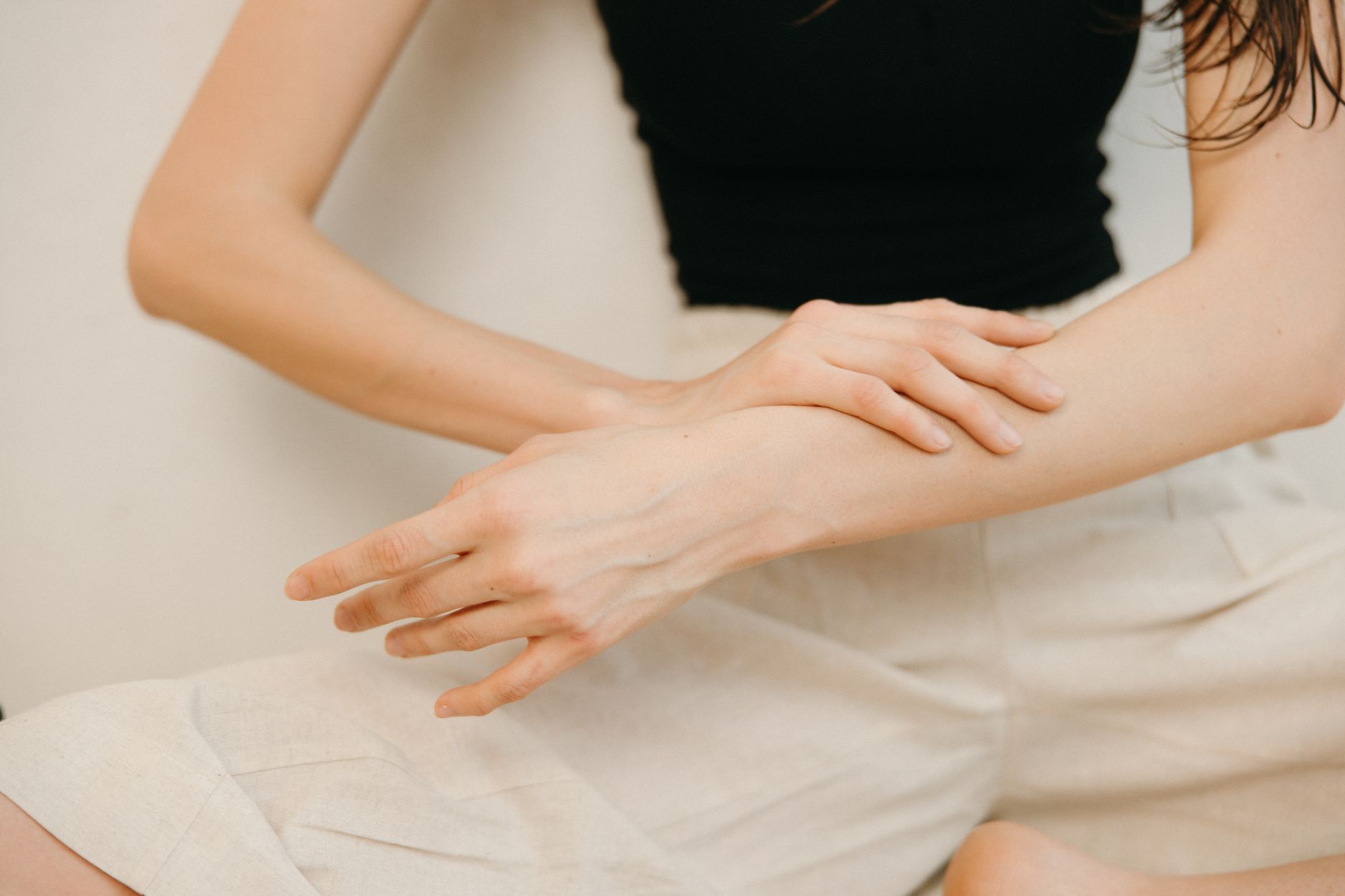
Perimenopause skin changes: what is going on
The NHS perimenopause symptom list names dry and itchy skin alongside hot flashes, poor sleep, joint aches and hair thinning. It rarely arrives alone. Most women who notice it are also noticing changes in their periods, their sleep or their mood.
Skin is full of oestrogen receptors. A 2022 review by NHS dermatologists in Clinical and Experimental Dermatology says they are densest on the face, the genital area and the legs, and that as many as 64% of women attending menopause clinics report skin problems. The same review links oestrogen to how much water skin loses through its surface and to how much collagen it keeps. Nearly a third of skin collagen goes in the first five years after menopause, and the loss tracks years since menopause more closely than age. A review in the Journal of Mid-life Health adds that the oil and sweat glands shrink and make less, which leaves skin drier.
Perimenopause is when those levels start to swing and fall, so the first dry patches and itchy evenings often turn up in your 40s, years before the last period.
Itchy skin in menopause: where it shows up
The itch usually goes with dryness. The dermatology review describes pruritus (the medical word for itching) as frequent after menopause, most often with dry skin, and says eczema-type rashes were the skin problem perimenopausal and menopausal women reported most in a large observational study. Those include contact dermatitis, a reaction to something touching the skin, and asteatotic eczema, a cracked, crazy-paving pattern on very dry skin, often on the shins.
Because the receptors cluster on the legs, face and genital skin, those are common places to feel it. An itch around the vulva belongs with the other vaginal changes of this stage, which our page on vaginal dryness and bladder changes in perimenopause covers, along with its own look-alikes such as thrush.
Formication: crawling skin in perimenopause
Some women describe something else: a prickling, tingling or crawling feeling, as if ants were walking on or under the skin, with nothing there to see. The medical name is formication, from the Latin word for ant. The Journal of Mid-life Health review describes intense tingling and formication as skin loses its suppleness after menopause, and puts it down to changes in the nerves and blood vessels that run through the collagen layer, which sex hormones influence.
It is unsettling but common enough to have a name, and it often comes in waves or at night. Two things are worth ruling out. A crawling feeling in the legs at night that eases when you move can be restless legs, which the NHS iron deficiency anaemia page lists as a less common sign of low iron. Intense itch with tiny spots, especially between the fingers, or itch that someone you live with shares, points to scabies, which a pharmacist or GP can confirm.
Other causes of itchy skin that look the same
The NHS itchy skin page says itch is common after the menopause and usually improves with time. It also says that, less often, itchy skin can be a sign of thyroid, liver or kidney problems. Several of these start in midlife and share other symptoms with perimenopause, which is why it helps to know what each one tends to bring with it.
Eczema and contact dermatitis
The NHS eczema page describes skin that is itchy and dry, cracked, scaly or thickened, with patches that look red, purple, grey or darker or lighter than the skin around them, often on the elbows, knees and hands. It usually starts in childhood but can start at any age, and it flares with soap, detergents, some fabrics, heat and stress. Visible patches that come and go are more typical of eczema than of plain dryness. If eczema becomes painful, hot, weeping, crusted or blistered, or you feel unwell with it, the NHS asks for an urgent GP appointment or a call to 111.
An underactive thyroid
Dry skin is on the NHS underactive thyroid list of common symptoms, next to tiredness, feeling cold, weight gain, low mood, poor concentration and irregular or heavy periods. Nearly every item there also turns up in perimenopause. Hashimoto's disease, the main cause in the UK, usually begins between 30 and 50. Our page on perimenopause or thyroid sets out the signs that lean one way or the other.
Low iron from heavier periods
Heavy periods are a very common cause of iron deficiency, the NHS says, and feeling itchy is one of its less common symptoms. The usual ones are tiredness, breathlessness, palpitations, paler skin and headaches. If your periods have got heavier, the guide to heavy periods in perimenopause and the PBAC blood loss scorer help you put a number on it before the appointment.
Liver problems
Itch is one of the symptoms of primary biliary cholangitis (PBC), a slow liver condition in which the immune system damages the bile ducts. The NHS PBC page lists itchy skin, extreme tiredness, bone and joint aches, dry eyes and mouth, and discomfort under the right ribs. Several of those sound like perimenopause. PBC is usually found with blood tests, often a routine one done for another reason. Later liver damage, which the NHS liver disease page calls cirrhosis, adds yellowing of the skin or the whites of the eyes, loss of appetite and feeling sick.
Kidney problems
Chronic kidney disease rarely causes symptoms early on. In its later stages the NHS kidney disease page lists itchy skin with swollen ankles, feet or hands, needing to pee more at night, tiredness, muscle cramps, poor appetite and blood in the pee. Blood and urine tests find it.
When to see a GP about itchy skin
For itch on its own, the NHS says a pharmacist can advise and tell you whether you need a GP. It sets the GP threshold at itchy skin that:
- affects your daily life, including your sleep
- does not get better with self-care or keeps coming back
- comes with a new rash, lump or swelling that worries you
- is all over your body
- is severe
I'd add the cases where the itch comes with something from the look-alikes above, because each of them changes the tests a GP will want: yellowing of your skin or eyes, swollen ankles or peeing more at night, heavier periods with tiredness or breathlessness, feeling cold and slowed down, or a white, shiny or sore patch on the vulva. Itch with yellow skin is worth an appointment soon rather than a wait to see if it settles.
What a GP may check
The NHS says a GP will look at your skin, ask about your symptoms and may arrange a blood test to help find the cause, or refer you to a dermatologist. The tests chosen depend on your other symptoms. A full blood count looks for anaemia, thyroid function is checked with TSH and T4, and liver and kidney problems show up on blood tests, with a urine test for the kidneys.
A hormone test will not prove that the itch is perimenopause. For women over 45, NICE says perimenopause is recognised from symptoms and cycle changes without blood tests for hormones, as our article on whether there is a test for perimenopause explains. Any blood tests for itching are there to find or rule out the other causes on this page.
What to note before the appointment
Itch is hard to describe in a ten-minute slot, and a few weeks of notes do the describing for you. Write down:
- where it itches, and whether it moves around or stays put
- whether there is a rash, and a photo of it on a bad day
- the time of day it is worst, and whether it wakes you
- any crawling or tingling, and whether moving your legs eases it
- new soaps, washing powder, skincare or clothes
- new medicines, and when each one started
- your period dates and how heavy each one is
- tiredness, feeling cold, swollen ankles, peeing at night, dry eyes or a change in skin colour
The printable symptom diary keeps periods and symptoms on one sheet, with each symptom rated mild, moderate or severe. To turn your notes into one page for the GP, the appointment summary builder lays out your cycle lengths, your worst symptoms and your questions, ready to print.
My take
If you are in your 40s, your periods are shifting and your skin has been getting drier for a few months, mostly on your legs and arms, I'd read it as part of the transition and mention it at your next appointment along with everything else. I would not wait on itch that covers the whole body with no rash, or itch that arrived with tiredness, heavy periods, swollen ankles or yellowing skin. Those are the ones where a blood test can find something specific, and iron and thyroid problems are common at this age. The two details I'd make sure to bring are when it started and what changed in the weeks before, from a new medicine to a new washing powder.
Related reading
Dry skin sits with the other body changes in perimenopause symptoms and how to track them. If your hair is changing in the same months, see hair thinning in perimenopause, and the look-alike finder sorts symptoms that could belong to something else. The symptoms topic collects every symptom page on the site.
Frequently asked questions
Can perimenopause make you itch with no rash at all?
Does itchy skin go away after menopause?
Can low iron cause itching?
Written by
Last checked 2026-11-06
Comments
No comments yet. Questions and your own experience are welcome.
Thank you. Your comment will appear once it has been reviewed.