Is it perimenopause?
PMDD or perimenopause?
The clue is timing. PMDD mood symptoms arrive in the week or two before a period and lift within a few days of it starting, month after month, while perimenopause mood changes can turn up on any day of the cycle. The two also overlap, because PMDD can get worse during the transition, so a daily record set against your period dates is how you and a doctor tell them apart.

What PMDD is
Premenstrual dysphoric disorder (PMDD) is a severe form of premenstrual syndrome. MedlinePlus describes it as severe depression symptoms, irritability and tension before menstruation, with at least one mood symptom among them, starting in the week before bleeding and usually easing a few days after the period begins. The NHS says it affects a small number of women and that its symptoms are much more intense than ordinary PMS, with a much greater effect on everyday life.
The list is long. MedlinePlus names loss of interest in daily life and relationships, tiredness, sadness or hopelessness, anxiety, feeling out of control, food cravings, mood swings with crying, panic attacks, irritability or anger that affects other people, bloating, breast tenderness, headaches, joint or muscle pain, poor sleep and trouble concentrating.
The International Association for Premenstrual Disorders (IAPMD) adds a point many readers find useful. People with PMDD have normal hormone levels. What differs is how the brain reacts to the ordinary rise and fall of estrogen and progesterone after ovulation, which is why a hormone blood test cannot show it.
Why the two get mixed up in midlife
Put the PMDD list beside the NHS list of perimenopause symptoms and much of it repeats: mood changes, anxiety, poor sleep, brain fog, tiredness, aches, headaches and a lower interest in sex. ACOG's PMS FAQ names perimenopause outright as one of the conditions that can mimic premenstrual symptoms or overlap with them, alongside depression, anxiety and thyroid disease.
Both also arrive at the same age. Perimenopause usually starts in the mid-40s, and our guide to when perimenopause starts covers the range. A woman who has had difficult weeks before her period for years may find them sharper just as the transition begins, and then cannot tell which of the two she is dealing with.
Why PMDD can get worse in your 40s
IAPMD lists menopause among the reproductive events during which PMDD can worsen, along with the first period, pregnancy and giving birth. That fits what PMDD is: if the trouble is a strong reaction to hormone swings, the years when those swings become larger and less predictable are the years it can flare.
There is research pointing the same way. A small 2006 study from the US National Institute of Mental Health (Richards and colleagues) asked 70 depressed perimenopausal women and 35 who were not depressed to rate their mood daily for one cycle. Premenstrual dysphoria showed up in 21% of the depressed group and 3% of the others. The authors called that a higher than expected rate, while noting it was not present in every depressed woman. Many of those with a clear premenstrual pattern on the daily ratings had not described one when simply asked, which says something about how little memory alone can tell you.
The changing cycle adds a practical problem. In the early transition, cycles start to vary by a week or more, and later there can be gaps of 60 days, as our piece on irregular periods in perimenopause explains. A premenstrual week is easy to spot when your period comes every 28 days. When it comes after 22 days, then 40, the bad week stops arriving on schedule, and that alone can make PMDD feel like something new.
PMDD or perimenopause: the timing test
The most reliable difference shows up on a calendar. ACOG says premenstrual symptoms are present in the 5 days before a period and end within 4 days after it starts, in at least three cycles in a row. IAPMD puts the PMDD window at the 1 to 2 weeks before menstruation, with symptoms that consistently resolve shortly after bleeding begins.
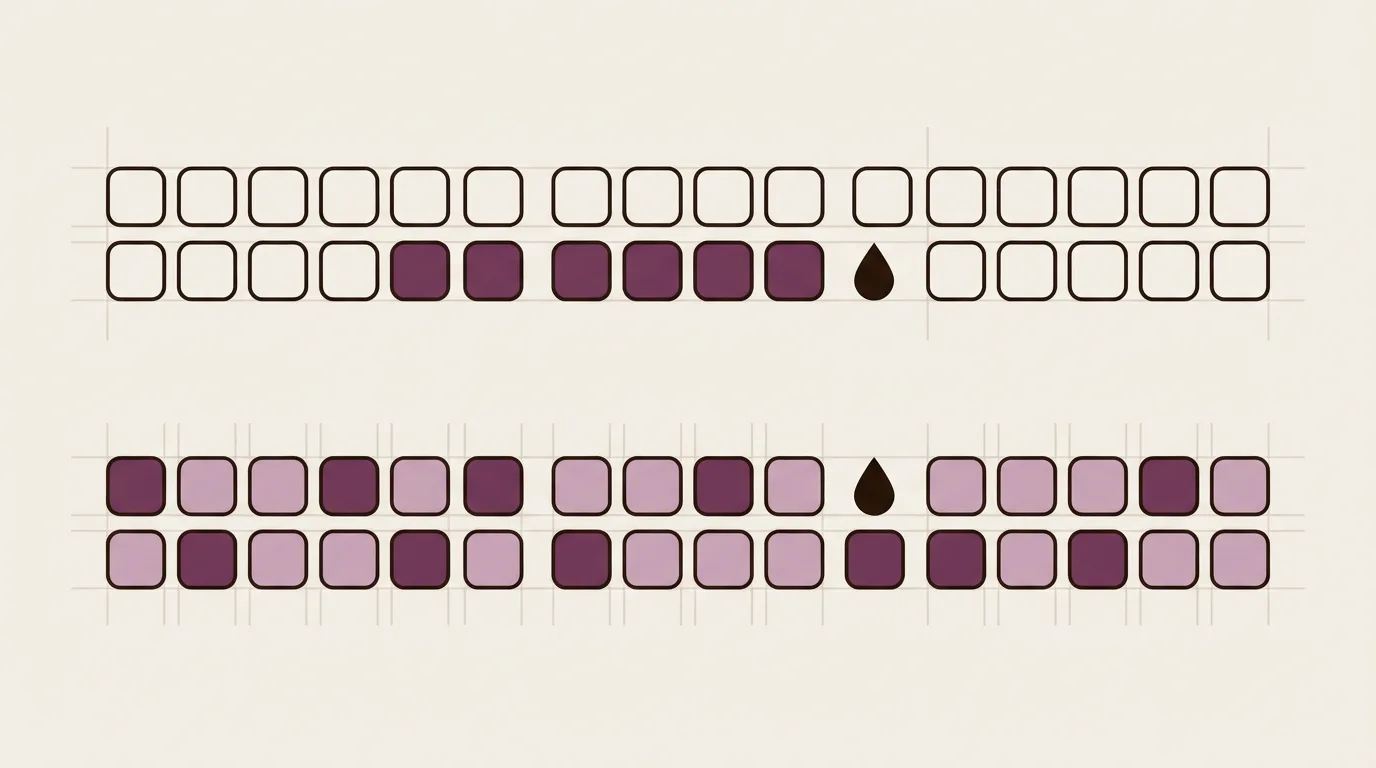
Three patterns are worth looking for in your own record:
- Bad days that close each cycle and good days after bleeding starts. This is the premenstrual pattern, whether or not perimenopause has begun.
- Low mood, anxiety or irritability most days, unrelated to your period. ACOG says depression usually shows up all month long, and the NHS lists mood changes among perimenopause symptoms with no link to any phase of the cycle. If hot flashes, night sweats or changes in your periods come with it, that points towards the transition.
- Symptoms all month that get noticeably worse before each period. IAPMD calls this premenstrual exacerbation (PME): an existing condition such as depression or anxiety flaring premenstrually. ACOG notes that depression and anxiety are the most common conditions overlapping with PMS, found in about half of women who seek treatment for it.
Premenstrual dysphoric disorder in perimenopause: when it is both
A woman can have PMDD and be in perimenopause at the same time, and the Richards study suggests the overlap is common among those who become depressed during the transition. A useful record does not try to prove one answer. It shows the doctor which symptoms follow the cycle, which do not, and which belong to the transition itself, such as hot flashes or periods that have become heavier or further apart.
One thing the timing test cannot sort out: once periods have become very irregular or have stopped, there is no premenstrual week to measure against. If that is where you are, the record still matters, because it shows how often low mood comes and whether it is getting worse.
How to track mood against your cycle
Every source here agrees on the method, and it is a daily one. ACOG asks for symptoms written down and rated each day for at least 2 to 3 months, together with the dates of your periods. IAPMD says daily tracking through at least two full cycles is the only current way to diagnose PMDD, using a sheet such as the Daily Record of Severity of Problems. The NHS suggests a diary covering at least two cycles to take to a GP.
In perimenopause, a few additions make the record more useful:
- the first day of every period, even a light or short one, so the doctor can see where each cycle begins
- each mood symptom by name (irritable, tearful, anxious, hopeless) rated mild, moderate or severe, every day including the good ones
- hot flashes, night sweats and sleep on the same page, since they belong to the transition and not to PMDD
- days when a symptom stopped you working, seeing people or looking after things at home, because both ACOG and the NHS weigh how far symptoms affect daily life
Our printable symptom diary gives you a grid for this with the period column built in, and the overview of perimenopause symptoms and how to track them explains what makes a record easy for a doctor to read.
What a doctor will look at
MedlinePlus says no exam or lab test can diagnose PMDD, and that a full history, a physical exam, thyroid testing and a mental health assessment are used to rule out other conditions. Your record is the main evidence. Perimenopause is similar for women over 45: the NICE menopause guideline says it is recognised from symptoms and cycle changes without hormone tests.
A thyroid check is part of the picture because MedlinePlus lists thyroid disorders among the factors that may play a role in PMDD, and an underactive thyroid also causes low mood and tiredness. Our page on perimenopause or thyroid sets out which signs lean towards the thyroid. On the NHS, a GP can advise on treatment if symptoms are affecting your daily life, and can refer you to a gynaecologist or psychiatrist where that is needed.
When to get help straight away
PMDD can bring thoughts of suicide, and IAPMD says these are part of the condition for some people. If you are feeling suicidal, the NHS says to call 999 or go to A&E, and in the US MedlinePlus points to the 988 Suicide and Crisis Lifeline by call or text. These thoughts can come back in the same week of every cycle, so if you recognise that pattern, tell your doctor about it even on a good day.
My take
I would not try to settle PMDD or perimenopause from memory, and the Richards study shows why: daily ratings found premenstrual patterns that the women themselves had not reported. I'd start a daily record today, rate each mood symptom with your period dates beside it, and keep it for two cycles before the appointment, longer if your cycles are already irregular. If the bad days keep landing just before bleeding and lifting after it, ask about PMDD directly. If they are spread across the month, ask about perimenopause and depression, and take the hot flash and sleep columns with you.
Related reading
The Is it perimenopause? topic gathers our pieces on telling the transition apart from other causes, and Symptoms covers the rest of the list that comes with it.
Written by
Last checked 2026-11-02
Comments
No comments yet. Questions and your own experience are welcome.
Thank you. Your comment will appear once it has been reviewed.